Inside the CRAFT Addis Panel: 'Designer Voices'
How African designers move beyond aesthetics to influence culture, responsibility, and global positioning; on their own terms.
25 Sept 2026 · 7 min read
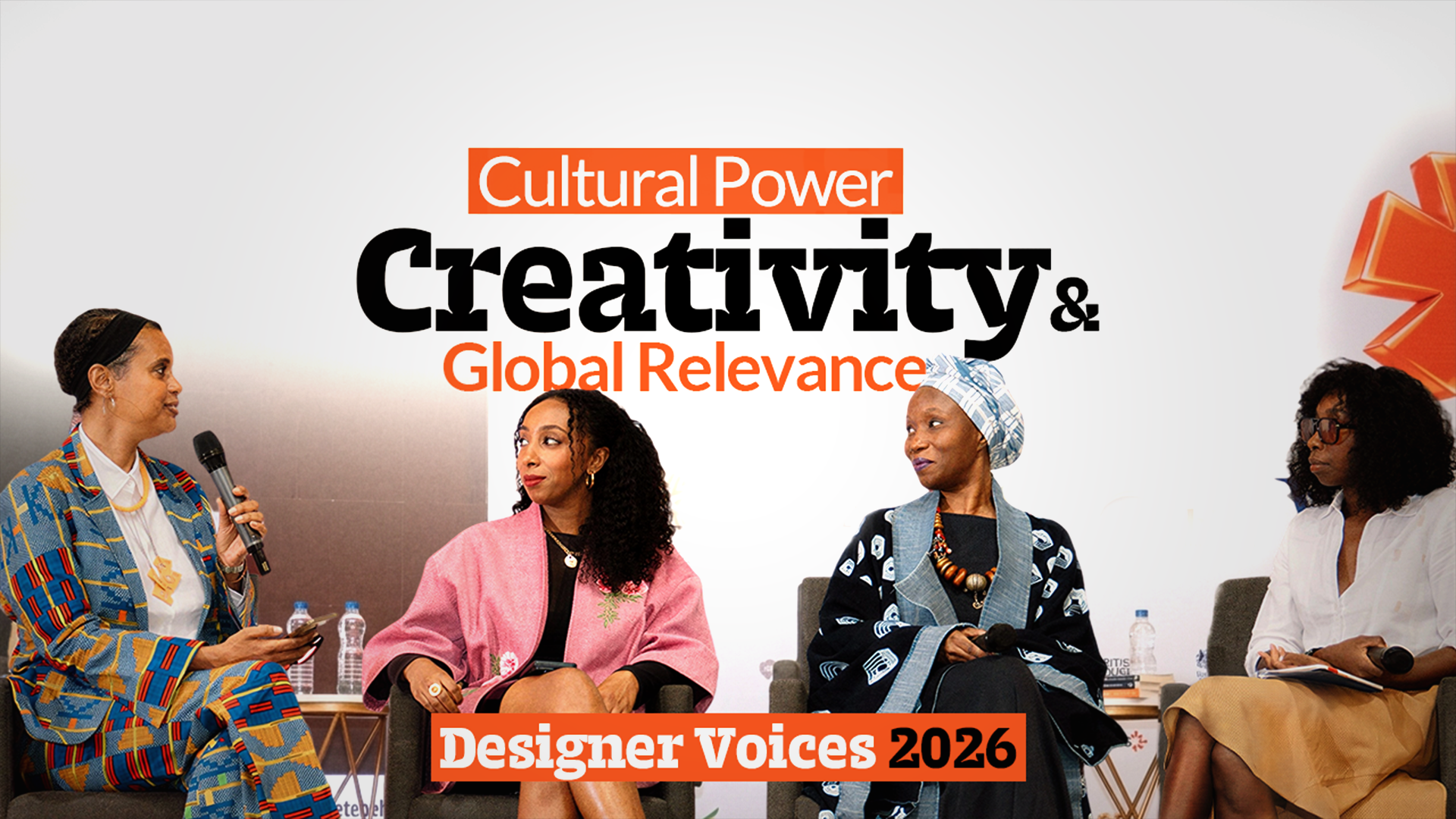
Opening the panel, moderator Anna set up a reframe of her own: the designer on stage isn't just a creator. She's a cultural architect, a storyteller shaping identity, systems, and global perception. The session's aim was to explore how African designers move beyond aesthetics to influence culture, responsibility, and global positioning; on their own terms.
She was joined by three designers with a combined half-century-plus in the industry: Mahalet Afework, founder of MAFI and, more recently, MFAL (Mafi Fashion and Lab) Academy in Addis Ababa; Namnyak, founder of Studio Namnyak in Kenya; and Awa Meite, the Mali-based designer who has spent three decades building an international career rooted in indigenous craft.
Fashion as Language, Not Product
Asked what defines her work beyond fashion, Mahalet described it as a language; one she uses to create dialogue between Ethiopian heritage and the global stage. Over the course of her career she's shown her work in more than 20 cities worldwide, carrying her flag and her craftsmanship with her. That path led naturally to education: she recently launched MAFI Academy to train the next generation of fashion leaders in Ethiopia and across the continent. Nobody assigned her the role of cultural ambassador, entrepreneur, and educator. She took it on because she felt the representation wasn't there yet, and someone had to carry it.
Awa Meite answered the same question from a different angle entirely: for her, fashion isn't a category, it's closer to breathing. "In the essence of African, we have fashion," she said. "We talk to each other without words, but we talk with fashion." Her own path into the industry started with loss; when her family's close friend, the designer Chris Seydoux, passed away, the responsibility for his heritage of indigo dyeing and Bogolan mud cloth fell, unexpectedly, to her. Rather than try to copy a genius, she went back to Mali's regions to learn directly from artisan communities; weavers, dyers, leatherworkers, whose knowledge, she said, humbled her. "I was the one supposed to be educated, but I was lost."
That humility became a method. Watching weavers work, she noticed they treated irregularities in their patterns as mistakes. She saw them differently. "Each time I saw a mistake, I was asking them to repeat the mistake," she said. "And the mistake became our brand signature." The approach reframed the relationship entirely; the artisans weren't executing her vision, they were co-authoring it.
Namnyak, the youngest voice on the panel, arrived at her label after years designing for another brand and a period of genuine doubt. "I got to a point where I asked myself, why do we keep creating more clothes?" That question sent her back to her roots; half Maasai, half Kikuyu, raised in a village where beadwork and basketry were part of daily life, not luxury craft. Her label now exists to connect that inherited knowledge to market access she has and artisan communities largely don't, modernizing traditional skills without stripping them of what makes them rich.
Does African Craftsmanship Need to Be "Luxury"?
The panel's sharpest exchange came on a deceptively simple question: can African craftsmanship be positioned as a global luxury advantage?
Mahilet pushed back on the premise itself. "Who defines luxury?" she asked. "Do African brands really need luxury? Is it for validation for Western markets, or is it really important for us as a continent?" Luxury, in her framing, is simply design, quality, and narrative; qualities African craft already has in abundance. The harder question isn't whether the work qualifies. It's whether chasing an externally defined luxury category is the right goal at all, given that the continent's 54-plus countries don't need a single positioning strategy. Her instinct: rather than fit into a hundred-year-old narrative built elsewhere, build a new model entirely.
But she was equally clear-eyed about the economics. An international luxury brand can sell a handmade bag for thousands of dollars; a comparable African-made piece often sells for a fraction of that, regardless of craftsmanship. Branding, in her view, is inseparable from that gap; a product's perceived value is tied to the perceived value of the nation it comes from. Investment in "Made in Africa" as a brand, not just a label, is part of closing it.
Awa reframed the conversation around who the market actually is. Pointing to major textile companies now opening stores across the continent, she argued the old logic; that a brand needs a European price point and a European address to count as luxury; no longer holds. "Luxury is the value you give to what you make," she said. Her own answer to skeptics who called her work expensive was direct: "If you cannot afford it, don't buy it. Because I know what I put in there. I know the value of it."
Community as Co-Author, Not Inspiration
Asked how she engages the communities she works with, Namnyak described a model built on authorship, not extraction. Artisans aren't a source of inspiration for a collection designed elsewhere; they're the starting point. "We sit down and create together, working with the skills that they have," she said. "That is where our mood board, our next collection, starts." The responsibility runs both directions: brands have to ensure communities are genuine collaborators in the storytelling, and consumers have a role too, in making sure cultural heritage isn't lost to trend cycles.
The Weight of Being First
Ana pressed Mahilet on a responsibility many designers of her generation carry without ever being asked to: building the institutions that didn't exist when they were starting out. Mahilet, who is self-taught and came up with no fashion school, no magazines, and no local reference points to learn from, described the responsibility in blunt terms: it's huge, and it can be frustrating. But she framed her work, including launching MFAL Academy to teach hand-woven textile techniques and African indigenous knowledge, as a relay race. Someone gave her a platform when she was starting out; now it's her turn to pass it forward, in her own way.
Sustainability Isn't a Trend Africa Needs to Catch Up To
Asked whether Africa can lead the global conversation on sustainability, Awa's answer reframed the premise once again. Sustainability, for much of the continent, was never an initiative to adopt; it's simply how things have been done. Clothes get passed down through families. Materials get reused because reuse is practical, not performative. Meanwhile, she pointed out, the same countries lecturing the world on sustainability are the ones exporting secondhand clothing dumps into African markets. "We need to have a clear vision of what can come into our countries," she said. "We should be more thoughtful about what we consume, how it is made, and whether it's good for our health."
Her closing point was as much about posture as policy: stop trying to prove sustainability to outside audiences, and instead trust the continent's own instincts. "We just need to keep doing what we do best," she said, "and the world will follow."
The Last Word
Closing the panel, Ana asked Namnyak what needs to change for African brands to compete globally without losing their identity.
Her answer had two parts. First, lead with authenticity; identity, she argued, is the competitive advantage, no different from anywhere else in the world, and losing it in pursuit of scale defeats the purpose. Second, build the relationships and supply chains that let brands deliver consistent quality reliably, so trust isn't a constant negotiation. Protecting cultural skills and competing internationally, in her framing, aren't in tension. They're the same project.
______________________________________________________________________________
This article is based on the panel discussion "Designer Voices" at CRAFT Addis, moderated by Anna, featuring Mahilet Afework (MAFI, MFAL Academy), Namnyak (Studio Namnyak), and Awa Meite.