A Creator Can Build an Audience. A Brand Has to Build Meaning.
Inside the CRAFT Addis Panel: 'From Creator to Global Brand'. A conversation with Colin Gayle on what it takes to turn an African creator into a global brand that lasts.
25 Sept 2026 · 6 min read
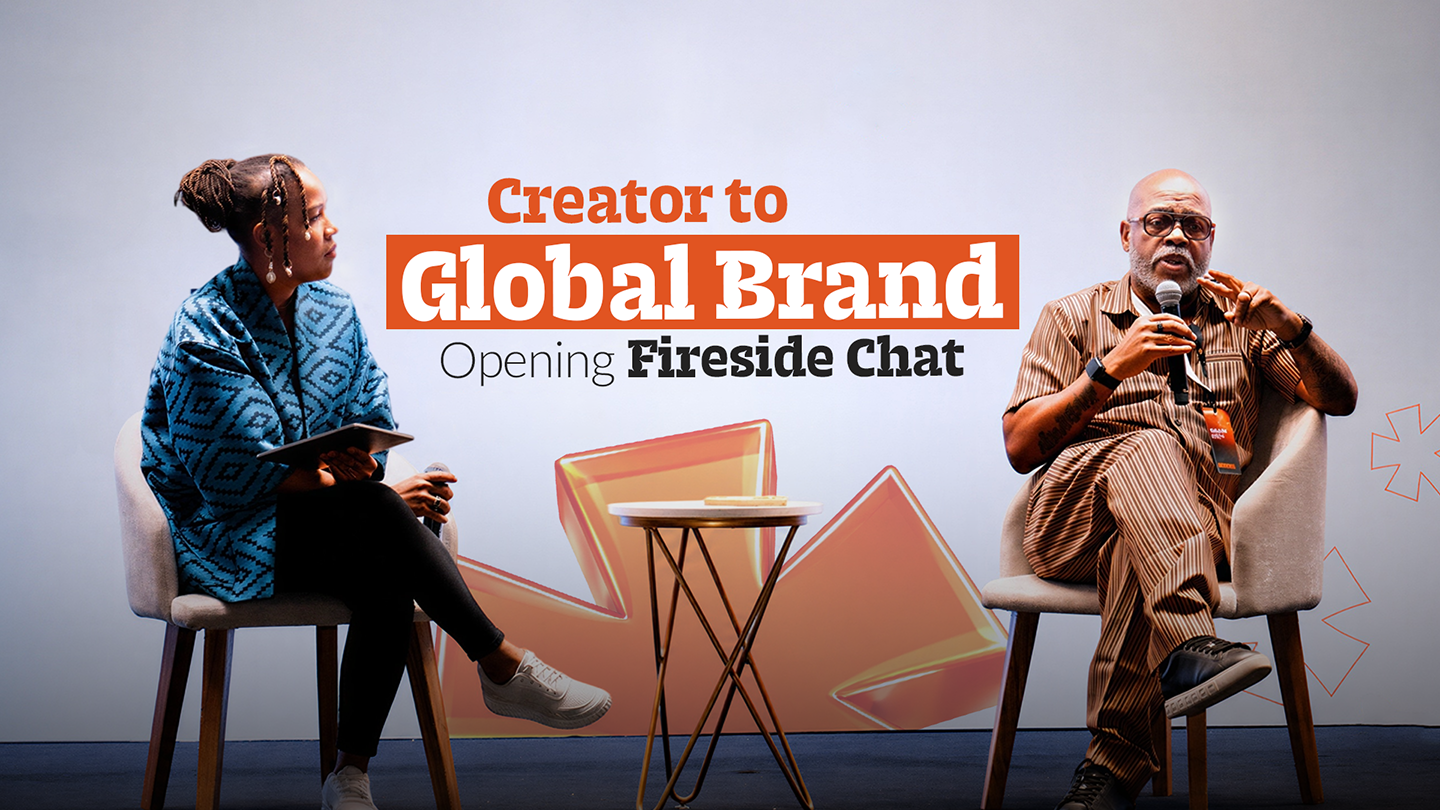
Opening the session, moderator Naima Mclean drew the line the rest of the conversation would sit on: a creator can build an audience, but a global brand builds meaning; it reaches across markets and platforms, it travels, it scales, and most importantly, it endures. The question on the table wasn't whether African creators can go viral. It's what it actually takes to turn one of them into something that lasts.
To answer it, she was joined by Colin Gayle, a Jamaican of Ethiopian descent and founder of Africa Creative Agency, an organization built on identifying, developing, and scaling African creative talent for the global stage. Over a career that began in the music industry in 1994 and has included work with Ne-Yo and 50 Cent, Gayle has more recently been instrumental in the rise of Tyla; one of the clearest examples yet of an African artist not just crossing over, but breaking through globally.
Seeing an Africa Nobody Else Saw
Gayle's relationship with the continent began in 1998, when an opportunity brought him to South Africa to work on a project for Nelson Mandela. That experience, he said, let him see South Africa, and the potential of Africa, through Mandela's eyes. The next decade took him around the world instead; moving hip-hop and R&B culture from North America into Europe and Asia, including a stretch living in Japan. When he returned to the continent roughly ten years later, it was with a new thesis: that Africa's next chapter would be about taking what it had to offer to the world.
Those first years back were rough. There wasn't yet much that was "exportable" in a way that matched what was happening globally; until Afrobeats broke through, and the sense of what was possible shifted.
What kept him on the continent through the difficult stretch, he said, was a kind of double vision. He saw a Lagos, an Ethiopia, an Africa that his industry peers simply didn't. When he told colleagues in LA they needed to pay attention, some laughed in his face; one told his wife he must have a second family there, since nothing else explained the constant trips back. His answer wasn't to argue. It was to bring people in through direct experience: the World Cup and Confederations Cup, the IPL, a Coca-Cola campaign in Kenya with Ne-Yo that led to meeting Diamond Platnumz. "I think the first step is seeing yourself in the movie," he said; meaning Africans needed to see themselves reflected globally before the rest of the world would take notice.
"Star Power" Is a Thing You Either See or You Don't
Ask Gayle how he finds talent, and he doesn't start with vocal range or chart potential. He talks about a quality he simply calls "the thing"; the ability to walk into a room and light it up. He saw it in Diamond Platnumz, who barely spoke English when they met and whose manager was, in Gayle's words, aggressively trying to hustle a meeting with Ne-Yo. He saw it in Wizkid. He saw it in Tyla.
With Tyla, the question he and his team set out to answer was deliberately specific: could they build a pop star who happens to be from Africa; not an "African pop star," a genuinely different proposition, but a global star who owns her identity in full? That distinction, he stressed, wasn't his to invent. It was Tyla's own vision going in. His job was to match that clarity with a team that understood the cultural nuance required to translate it globally; people who knew that moving between South Africa, London, and Tokyo, "red is not red, blue isn't blue," and meaning can shift entirely depending on where you're standing.
That nuance, in his view, is exactly what record companies in America missed with Afrobeats. Executives who looked like the artists they were signing didn't necessarily understand where those artists came from, and assumed the African story mapped onto the hip-hop story they already knew. "It's not the same story," he said. "It's not the same path."
Relationships Are Infrastructure
One theme ran through nearly everything Gayle said: nothing happened cold. When his team landed in Tokyo, the Sony executive they met wasn't a stranger; Gayle had worked with him for fifteen years. Sylvia Rhone, who signed Tyla, was the same executive who signed Gayle's first act when he was 23. His former agent at CAA had since moved to Spotify. "We weren't walking in a room saying 'hi' for the first time," he said. That history bought his team something a first meeting can't: time, trust, and a willingness to listen.
The Missing Piece Is Artist Development
Pushed on what the industry gets wrong, Gayle didn't hesitate: the continent is skipping steps. The typical pattern, as he described it, starts with a catchy hook that catches on, and an industry that starts chasing it before the artist behind it has any of the infrastructure needed to survive what comes next; no training, no mental health support, no one around them who understands what they're walking into. Then they're on a plane, dropped into an unfamiliar market, carrying expectations that were never aligned with their own to begin with.
He traces his own belief in structured development back to his years in Philadelphia, where the emphasis was on fundamentals: how to write a song, what makes a hit melody, how to actually perform. What the continent needs, in his view, isn't more institutions built around the person holding the mic. It's an ecosystem around them. Behind every artist who breaks through, he said, there are roughly 25 people; managers, stylists, tour managers, partners; who make that breakthrough possible. At 57, he knows he can't personally scout the next Tyla. What he can do is build enough people trained to spot and nurture "the thing" that the search stops depending on any one person.
Build the Local Business Before the Global One
Asked what fundamental blocks are needed for artists to thrive internationally, Gayle's answer was direct: build the local music business first. That means functioning performing rights organizations, corporations that actually value creative work enough to pay for it, and artists who understand their own IP; reading contracts carefully, keeping them short enough to pivot when needed, knowing what to hold onto and what to let go of. None of that, he argued, is separate from "the business." It is the business, and the tools to build it are more accessible now than ever, with AI lowering the barrier to understanding contracts and structures that used to require specialized, expensive expertise.
On Tyla specifically, he described the scale of investment required as effectively all-or-nothing: his team picked a label partner who understood and believed in the continent, invested heavily upfront in production and visuals that matched anything coming out of any other market in the world, and then, in his words, "took a huge gamble." Timing, he acknowledged, was ultimately outside anyone's control; "that's just God." But the preparation that let his team capitalize on that timing when it arrived was entirely within their control.
The Last Word
Closing the session, Gayle was asked what he'd tell the next generation of executives building global brands.
His answer had less to do with strategy than with people: surround yourself with those who know more than you do. Find something you truly believe in, and don't take no for an answer. He traced his own persistence back to where he started; his mother worked as a domestic helper, and his family were the kind of immigrants often dismissed elsewhere. "There's been no free rides," he said.
Gayle and his team are now bringing HYBE's K-pop model to Africa, another platform built around the belief that's driven his career: that African talent, given the right systems, timing, and people around it, can compete with anything the world has to offer. "I believe I was put here for a purpose," he said. "And I'm only getting started."
______________________________________________________________________________
Watch the full Fire Side Chat on CRAFT YouTube Channel
This article is based on the panel discussion "From Creator to Global Brand" at CRAFT Addis, moderated by Naima Mclean, featuring Colin Gayle, founder of Africa Creative Agency.